
Reel to Reel Plating Expertise
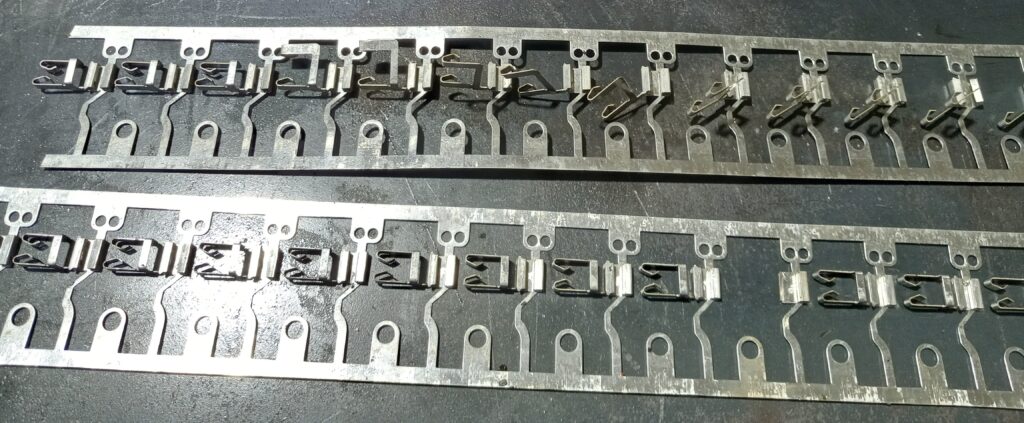
Reel-to-Reel Plating for Precision Metal Stampings
High-Volume, Cost-Effective Finishing from Acro Metal Stamping
Reel-to-reel plating—also known as continuous strip plating—is one of the most efficient and consistent methods for finishing stamped metal components. For high-volume applications, it offers a combination of speed, uniformity, and cost savings that batch plating processes simply cannot match.
At Acro Metal Stamping, reel-to-reel plating is a key capability used to deliver high-quality plated components for electrical, automotive, and industrial applications. By integrating plating with precision stamping processes, Acro helps customers reduce handling, improve consistency, and streamline production.
What Is Reel-to-Reel Plating?
Reel-to-reel plating is a continuous electroplating process in which metal strip—typically fed from a coil—is passed through a series of plating baths and rinses while remaining in strip form. The material is then rewound onto a take-up reel or fed directly into downstream operations.
Unlike rack or barrel plating, which handle discrete parts, reel-to-reel plating processes material before or during stamping, making it ideal for high-speed, high-volume production.
Common Materials and Plating Types
Reel-to-reel plating is commonly used with:
- Copper and copper alloys (such as brass and phosphor bronze)
- Steel and stainless steel strip
- Nickel alloys
Typical plating finishes include:
- Tin plating (for solderability and corrosion resistance)
- Nickel plating (for wear resistance and barrier layers)
- Silver plating (for high conductivity applications)
- Gold plating (for high-reliability electrical contacts)
At Acro Metal Stamping, plating specifications are carefully controlled to meet customer requirements for thickness, adhesion, and performance.
How Reel-to-Reel Plating Works
The reel-to-reel plating process follows a continuous, tightly controlled sequence:
- Uncoiling – Raw strip material is fed from a coil into the plating line.
- Cleaning and Preparation – The strip is cleaned to remove oils, oxides, and contaminants that could affect adhesion.
- Electroplating – The strip passes through plating baths where metal ions are deposited onto the surface using electrical current.
- Rinsing and Drying – Excess chemicals are removed, and the strip is dried.
- Recoiling or Inline Processing – The plated strip is recoiled or transferred directly into stamping operations.
Because the process is continuous, it supports extremely high throughput with consistent results across long production runs.
Benefits of Reel-to-Reel Plating
Cost Efficiency at High Volumes
Reel-to-reel plating minimizes labor, handling, and processing time compared to batch plating. For high-volume programs, this results in significantly lower cost per part.
Consistent Coating Thickness
Continuous processing ensures uniform plating thickness across the entire strip. This is especially important for electrical components where conductivity and contact performance depend on precise plating control.
Reduced Handling and Damage
Because parts remain in strip form during plating, there is less risk of scratching, tangling, or deformation compared to plating loose parts.
Improved Production Flow
Reel-to-reel plating integrates seamlessly with progressive die stamping, enabling streamlined manufacturing from raw material to finished component.
Selective Plating Capability
One of the biggest advantages of reel-to-reel plating is the ability to apply plating only where needed. Selective plating reduces material costs—especially for expensive finishes like silver or gold—while maintaining performance in critical areas.
Reel-to-Reel Plating vs. Batch Plating
Understanding when to use reel-to-reel plating versus rack or barrel plating is key to optimizing cost and performance.
Reel-to-Reel Plating is best for:
- High-volume production
- Continuous strip-fed stamping
- Parts requiring selective plating
- Tight control of plating thickness
- Electrical and contact components
Batch Plating is better suited for:
- Lower volume runs
- Large or complex formed parts
- Components that cannot remain in strip form
- Post-stamping finishing requirements
At Acro Metal Stamping, we help customers determine the most efficient plating method based on part design, volume, and performance requirements.
Integration with Precision Metal Stamping
One of the key advantages of working with Acro Metal Stamping is the ability to integrate reel-to-reel plating with progressive die stamping operations.
Pre-Plated Strip Stamping
In this approach, material is plated first and then stamped. This is ideal for:
- Electrical terminals and connectors
- Contact components
- Parts requiring selective plating
Tooling is designed to protect plated surfaces and maintain finish quality throughout the stamping process.
Post-Stamp Reel-to-Reel Plating
In some cases, parts are lightly formed in strip form and then plated before final cutoff. This allows plating to be applied after forming while still benefiting from continuous processing.
Quality Control in Reel-to-Reel Plating
Maintaining plating quality is critical, particularly for electrical and high-performance applications. Acro Metal Stamping focuses on:
- Consistent plating thickness control
- Adhesion verification
- Surface cleanliness and preparation
- Monitoring of bath chemistry and process parameters
- Visual and dimensional inspection
For applications requiring tight tolerances or specific performance characteristics, plating processes are aligned with customer specifications and industry standards.
Applications for Reel-to-Reel Plated Components
Reel-to-reel plating is widely used across industries that demand precision and reliability.
Common applications include:
- Electrical terminals and connectors
- Lead frames and contact springs
- Automotive electronic components
- Battery contacts and conductive parts
- Appliance and consumer electronics components
These applications benefit from the combination of high conductivity, corrosion resistance, and consistent quality that reel-to-reel plating provides.
Why Choose Acro Metal Stamping for Reel-to-Reel Plating?
Acro Metal Stamping combines precision stamping expertise with plating process knowledge to deliver complete, production-ready components.
Customers choose Acro for:
- Experience with high-volume plated stampings
- Expertise in selective plating strategies
- Seamless integration with progressive die stamping
- Support for customer-owned tooling
- Reliable, repeatable production quality
By working closely with customers early in the design process, Acro helps optimize both stamping and plating to reduce cost and improve performance.
Partner with Acro for High-Volume Plated Stampings
Reel-to-reel plating is one of the most effective ways to improve efficiency, reduce cost, and enhance quality in high-volume metal stamping programs. When combined with expert tooling and process control, it delivers consistent results at scale.
Contact Acro Metal Stamping to discuss your next project and learn how reel-to-reel plating can improve your component performance and total manufacturing cost.